
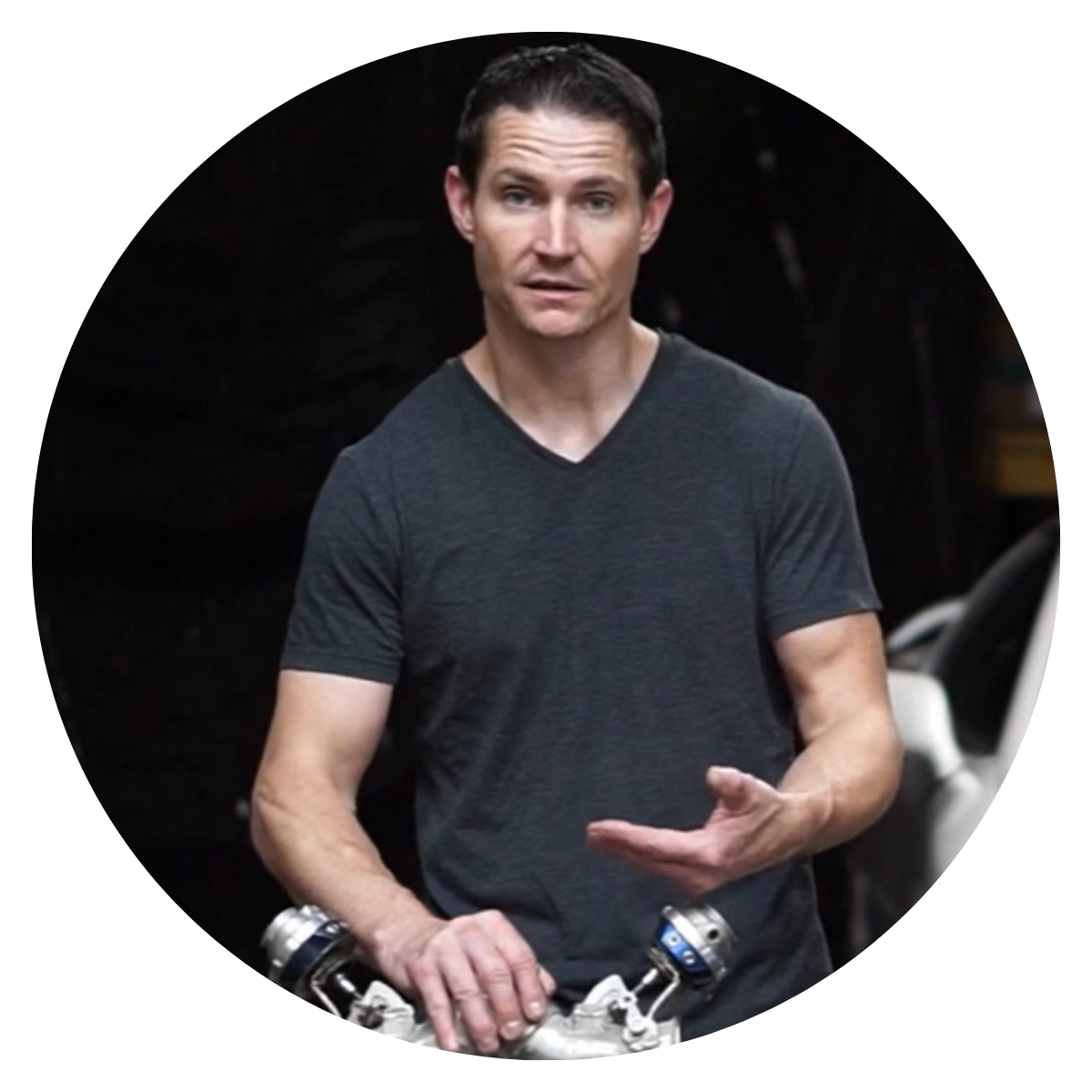
In 2013, Andrew Hlava was frustrated every time he drove a turbocharged car.
The turbo industry and enthusiasts shared the same goal: optimize response while maintaining efficiency and top-end power. But the solutions kept missing the mark. Variable-geometry turbos are binding due to carbon buildup. Electronic actuators are failing due to heat. Complex boost controllers add cost and reliability issues without delivering what enthusiasts actually wanted. Minor improvements are buried under layers of complexity that make everything harder to tune, more expensive to fix, and less enjoyable to drive.
Andrew knew there had to be a better way.
If he could get two turbochargers of entirely different sizes working together in sequence, using two completely different MAPs, he could deliver instant turbo response from a small frame even under light throttle, while maintaining seamless power delivery across the entire RPM range. Small turbo response at low loads. Big turbo power up top. Both, not either/or.
This had been attempted since the invention of turbochargers. Porsche tried with the 959. Mazda tried with the RX-7. Toyota tried with the Supra. Every major manufacturer eventually abandoned it. The packaging was impossible. Controlling exhaust flow between turbos without restrictive plumbing defeated everyone.
Until now.
Andrew spent 12 years getting his hands dirty, solving problems the industry had given up on. Over $250,000 invested. Countless prototypes. Working through the engineering complexity so enthusiasts would never have to deal with it. The breakthrough: two integrated full-flow valves positioned to capitalize on exhaust gas pressure and volume changes. No electronics. No sensors. No ECU control. Just mechanically-operated valves responding to spring pressure, easily changeable to match your setup. Add check valves on the compressors’ charge piping to prevent backflow when one is overpowering the other, and you’re done.
All the complexity lives in the engineering Andrew already did. For the enthusiast, it’s simpler and more reliable than the “solutions” the industry kept pushing.
This is what happens when someone refuses to accept that a problem is impossible just because everyone else abandoned it. Twelve years of obsessive development. Two U.S. utility patents. A system that finally delivers what sequential turbocharging always promised but never achieved: instant response, maximum power, zero compromise.
Built by an enthusiast who wouldn’t accept “good enough” because he knew what driving should feel like.
Join the first wave of builds and see the results for yourself.